
 Main Admin/Updated /2 min read/Science Explorer
Why Is the Sky Blue?
Learn how air scatters sunlight, why the sky looks blue rather than violet, and why sunsets can turn orange or red.
In this article ↓

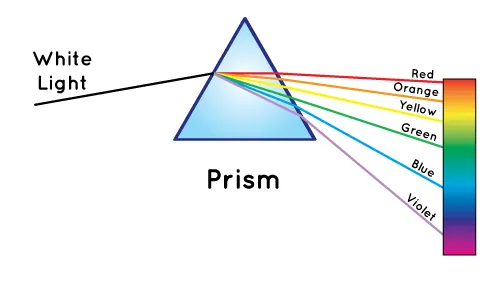
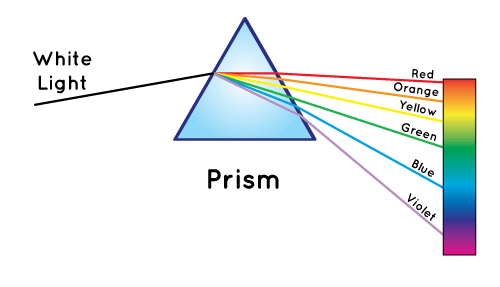
Look outside on a cloudless afternoon: the sky seems to have a colour of its own. Yet the air around us is almost invisible. The explanation begins with sunlight, which contains a range of visible colours rather than just white.
What you will learn
How sunlight interacts with air; why blue dominates the daytime sky; and why sunsets can look orange or red.
Light meets the atmosphere
Sunlight entering Earth's atmosphere interacts with nitrogen, oxygen and tiny particles. Molecules scatter shorter visible wavelengths more strongly than longer ones. This process is called Rayleigh scattering. Blue light reaches our eyes from many directions, so we perceive a blue sky even when we are not looking toward the Sun.
Violet light has an even shorter wavelength, but our eyes are less sensitive to it and the sunlight reaching us contains a different mix of wavelengths. Together these factors help explain why the sky usually looks blue rather than violet.
Why sunsets change colour
When the Sun is near the horizon, its light travels through a longer stretch of atmosphere. More short-wavelength light is scattered out of the direct beam. Red and orange wavelengths become more prominent along the line of sight. Dust and aerosols can modify the colours further; not every sunset looks the same.
Observe it
Compare the colour directly overhead with the colour near the horizon on a clear day. Record the differences in words. Never stare at the Sun.
Exam corner
Question: What mainly makes Earth's clear daytime sky appear blue?
A. Reflection from oceans B. Rayleigh scattering C. Earth's magnetic field D. Moonlight
Answer: B. Air molecules preferentially scatter shorter visible wavelengths.
Key takeaway
The sky's colour is an effect of light interacting with the atmosphere, not a blue layer surrounding Earth.
FAQ
Is the sky always blue? No. Clouds, haze, sunrise, sunset and atmospheric conditions change what we see.
Source references for editorial review
Sources and editorial information
Publisher: Parasmani Pustakalaya Educational Trust. Source organizations do not endorse PPET.
Editorial review:
- NASA Space Place: sky colour — NASA Space PlaceChecked: 15 October 2026Supports: Visible sunlight contains different wavelengths.; Molecular scattering favours shorter visible wavelengths.; Longer atmospheric paths modify sunset colours.
- NOAA/NWS: sky colour — NOAA/NWSChecked: 15 October 2026Supports: Visible sunlight contains different wavelengths.; Molecular scattering favours shorter visible wavelengths.; Eye sensitivity and the spectrum help explain blue rather than violet.; Longer atmospheric paths modify sunset colours.
Image credits
- Image source · NASA · NASA · NASA · NASA
- Image source · NASA · NASA · NASA · NASA

- Science Explorer
- PPET GyanDeep
- educational learning
Keep learning within reach
Help the library grow
Your contribution supports PPET’s library and educational work. Explore how you can be part of the trust’s mission.